
Shouldn’t Latin American Music sound Latin American?
We try to attend around six conferences or trade shows every year. We end up talking to a lot of people, and among that number many of them are students. It depends on the event, but normally, we put out on display at least two hundred pieces from our catalog, in representation of the 100 or so composers whose music we publish. After twelve years, we are proud to say that we have assembled a very representative sampling of the classical music from Latin America. This means that we have published music for every orchestral instrument, and from nearly every Latin American country. We mainly work with living composers, but lately we’ve also been focusing on publishing music from the end of the 19th century to about the fourth decade of the 20th. Oftentimes, for these earlier pieces we do extensive research so as to develop a performance history, or to cite previously published critical or analytical commentary. However, above all, our principal objective is to assemble a catalog that fairly and honestly represents Latin America’s many styles of classical music. Wait a minute! Many styles? Yes! And we do this knowing that for many US musicians there seems to be only one style, which, roughly speaking, is folkloric. To put it another way, obviously, Latin American classical music has to sound like it’s based on a folk tune, right? Uh, no. There is, of course, a fairly large body of pieces that are based on, or have some connection to, Latin American folk melody or rhythms. Nevertheless, this association seems to have been stuck into our US psyche, we believe, for two reasons. First, the teeny tiny number of Latin American composers whose music is discussed in US music history textbooks—I’m looking at you, Carlos Chávez and Heitor Villa-Lobos!—is folkloric, even though the former really wanted to be known for his non-folkloric compositions, and the latter, well, not to put too fine a point on it, but he focused on composing the sort of music that people wanted to listen to. (Rather like how your social media feed ends up showing you all the stuff it thinks you’re interested in). However, because reason number two states: “repetition burns its way into your head,” the music of both composers began to become very popular here in the US during the 1930s, and this soundscape has just stuck with us over these many years. Truth be told, for us, one of the most attractive features of Latin America’s classical music is that it is the most diverse genre of classical music in the world. Because of this, there have been many Latin American composers who avoided folkloricism entirely in favor of more contemporary styles, in a way, like composers here in the US or in Europe. For example, the same year (1941) that Villa-Lobos composed his hauntingly beautiful Bachianas Brasileiras No. 4, Argentine composer Honorio Siccardi (1897-1963) wrote this trio, described as “elegantly neo-classic,” for violin, cello and piano. Whatever label we may use, though, you definitely wouldn’t call it folkloric. 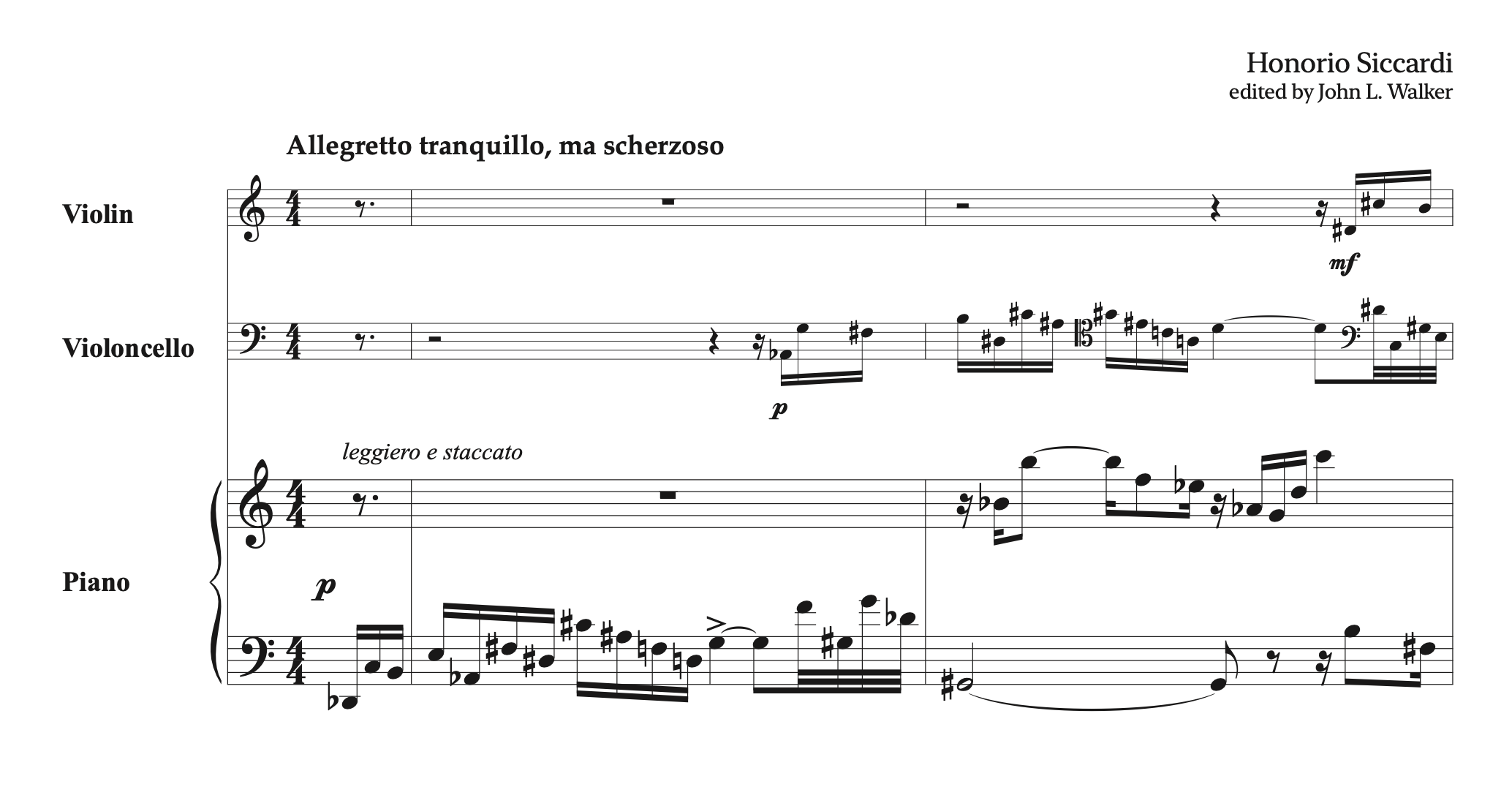
In short, we have to understand and appreciate Latin American classical music for what it is, not what we would like it to be. This means that some of it we may like, and other pieces, maybe not so much.
 |